Strengthening Research Software Management in Dutch UMCs: Highlights from the Second DReaMS Community Meetup
Written by Anna Niehues, Özgün Balaban, Magnus Palmblad, Mariia Steeghs-Turchina, and the DReaMS Community
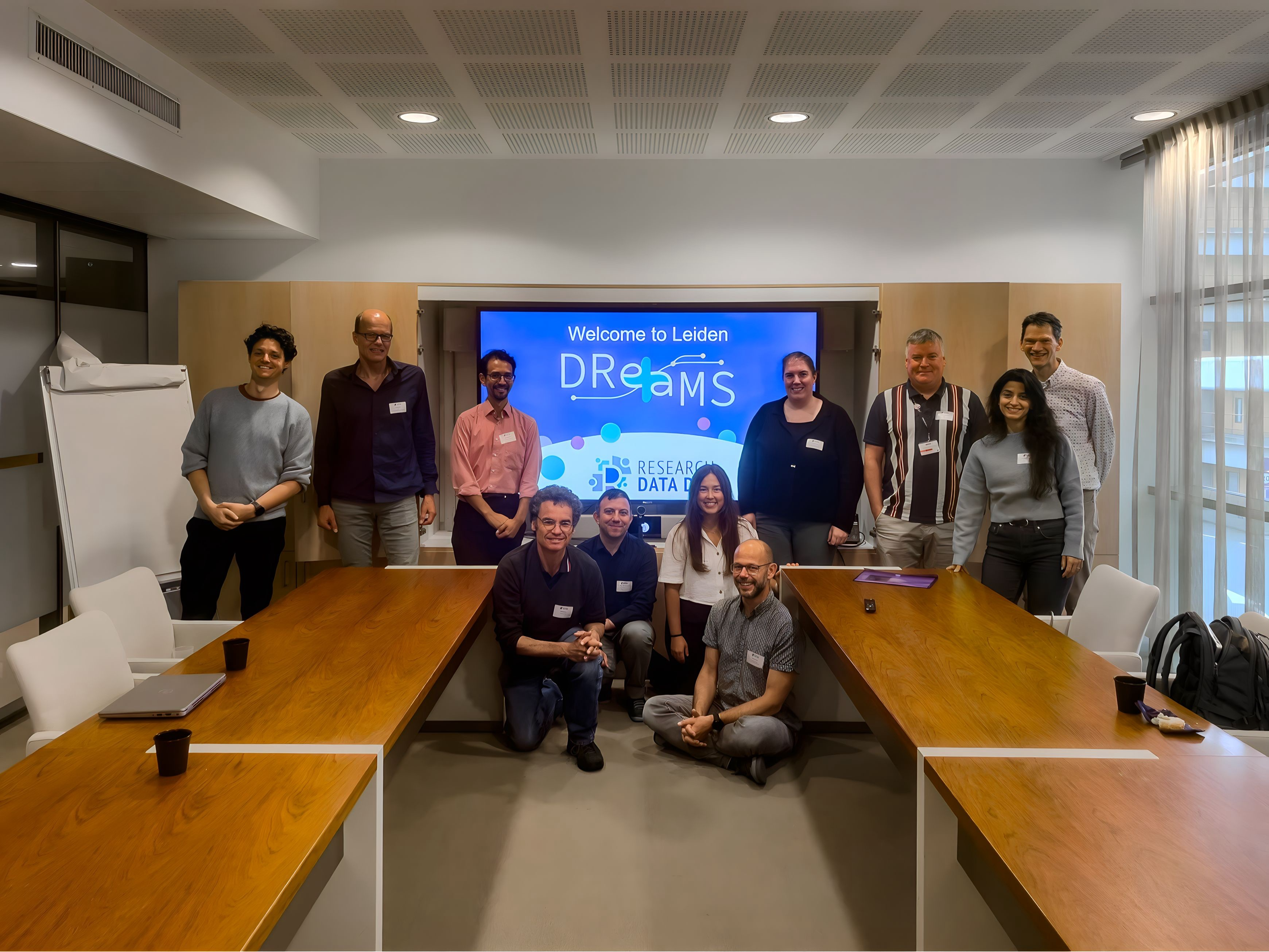
DReaMS is a collaborative community formed by Digital Competence Centers (DCCs) from Dutch University Medical Centers (UMCs) that is committed to advancing research software management (RSM). On 23 September 2025, network members came together in Leiden for the second community meetup during the LUMC Research Data Day. The event aimed to align practices and foster collaboration across institutions, building on the momentum of the first meetup in 2024 (Pronk 2024).
“Research Software includes source code files, algorithms, scripts, computational workflows and executables that were created during the research process or for a research purpose” (Gruenpeter et al. 2021). For Dutch UMCs, effectively managing research software is essential to ensuring reproducibility, efficiency, and reuse, while supporting compliance with Open Science policies and regulatory requirements.
The opening session, co-chaired by Anna Niehues and Thomas Pronk, featured updates shared by participants, setting the stage for a day of engaging discussions and knowledge exchange. The meetup provided a valuable opportunity for the participating UMCs and national infrastructure partners—the Netherlands eScience Center and ELIXIR-NL—to connect, share updates, and explore key topics. The discussions focused on developing RSM guidelines, strategies for software sustainability, providing training, and identifying connection points to strengthen joint efforts.
Towards Research Software Management Guidelines for Dutch UMCs
During the session on Research Software Management Guidelines, co-chaired by Mariia Steeghs-Turchina and Carlos Martinez, participants identified common questions researchers have, mapped available support, and identified gaps across Dutch UMCs. We explored what researchers need most, how institutions respond, and where key gaps remain.
Researchers regularly seek support on version control, Git or GitHub usage, and software maintenance. This indicates growing awareness but also uncertainty about best practices. In the absence of clear guidelines, RSM support staff often direct researchers to online tutorials, the Software Carpentry program, the Research Software Quality Toolkit for Sciences (RSQkit) and institutional Git courses, as well as AI-powered coding assistants. These dispersed resources may be difficult to navigate and a shared resource hub connecting training and guiding materials could provide added value to researchers. Better recognition mechanisms, such as software citation, are also needed to incentivize the following best practices.
In addition, the uncertainty from researchers about best practices demonstrates the need for clear guidelines and policy on RSM. Different UMCs are currently developing institutional guidelines on best practices that consider Open Science and FAIR principles, as well as measures to preserve privacy and ensure security. Raising awareness of those guidelines will rely on direct contact with research groups, integration into (graduate school) curricula, and a regular presence at institutional events. Other outreach approaches include newsletters, intranet pages, and departmental presentations. Maintaining visibility and aligning with existing support structures is essential.
Research Software Sustainability: Long-term Maintenance and Reusability
During the breakout session on research software sustainability, which was co-chaired by Magnus Palmblad and Sietse Rispens, the challenges of maintaining software, especially when the original developer is no longer available, were discussed. Possible internal and external solutions were also explored.
A critical phase occurs between the realization that a particular piece of software has wider applicability and the developer’s departure, often after completing their studies or postdoctoral research. During this period, it is important to plan for sustainability as early as possible, with a focus on documenting the code, creating software metadata and involving more people in the development process.
Good habits, such as writing code that is both readable and well-documented, encourages others to contribute to the codebase and help to sustain it. Students are often highly motivated to write software from scratch. While this is an important experience, students making significant contributions by adding novel functionality to existing projects should be rewarded equally. This requires a change in culture, away from “yet another tool to do X” to having more people contribute to community-supported open science projects. Training on how to use Git or how to contribute to community projects is essential. Journal editors should be encouraged to consider such contributions as potentially equally novel and useful as stand-alone software.
Research Software Training Through the Lens of FAIR and Open Science
While the first DReaMS meetup in 2024 identified a lack of intermediate-level training as a key challenge, this year’s breakout session on software training, co-chaired by Özgün Balaban and Bauke van der Velde, uncovered gaps in fundamental research software training.
It is often challenging to identify suitable communication channels through which to raise awareness among new PhD students and researchers of research software practices and available training and resources. While some topics, such as Git, which also have a high popularity, are covered repeatedly by training programs, others are underrepresented. These include, e.g., conceptual-level training for beginners, good coding practices, software management, documentation, and AI-supported development. A lack of balanced training coverage also poses a risk to the sustainability of research software.
The activities identified as being effective in increasing awareness include Coding CAFEs (Moopen et al. 2023), mentorship programs, peer learning, peer reviews of software documentation, and guest lectures. Such formats do not only build practical skills, but also strengthen communities. Suggested collaboration opportunities include sharing course materials across institutions, setting up trainer communication channels, such as RST-NL, and offering joint workshops. The next steps will be discussed during upcoming online meetings of the DReaMS community.
A common challenge in the current training landscape and in the sustainability of research software is that initiatives are fragmented, resulting in uneven coverage across the software development lifecycle. A more coherent approach is required to address this, involving clear policies, long-term planning, secure funding and a sufficient workforce aligned with institutional project needs.
This blog is cross-posted on the Netherlands eScience Center blog.